Sewer backup: what to do first
A sewer backup is different from a clogged fixture. The signs are wastewater rising in the lowest drain in the house, several fixtures draining badly together, or a smell of sewage coming from floor drains.
Do this now
Stop all water use. Every flush or load of laundry adds to the backup.
Keep children and pets away. Sewage carries bacteria.
- If the water is only in a basement floor drain, do not walk through it with the power on in that area.
- Call the plumber and ask about the camera visit.
Which part of the line is yours?
In Forest Lake the City Sewer Department maintains the public sanitary sewer main. Its guidance is that when a backup is reported, staff check the main through a manhole, and if the main is clear the blockage sits in the pipe between the main and the house. That pipe belongs to the property owner.
That shapes the first call. If you cannot tell where the problem sits, the city asks residents to call its Utilities Department before hiring a drain company, and the city notes it has bought No Fault Sewer Backup Coverage that may reimburse damage from a city-maintained main backup. Details are on the city Sewer Department page.
How sewer damage is found
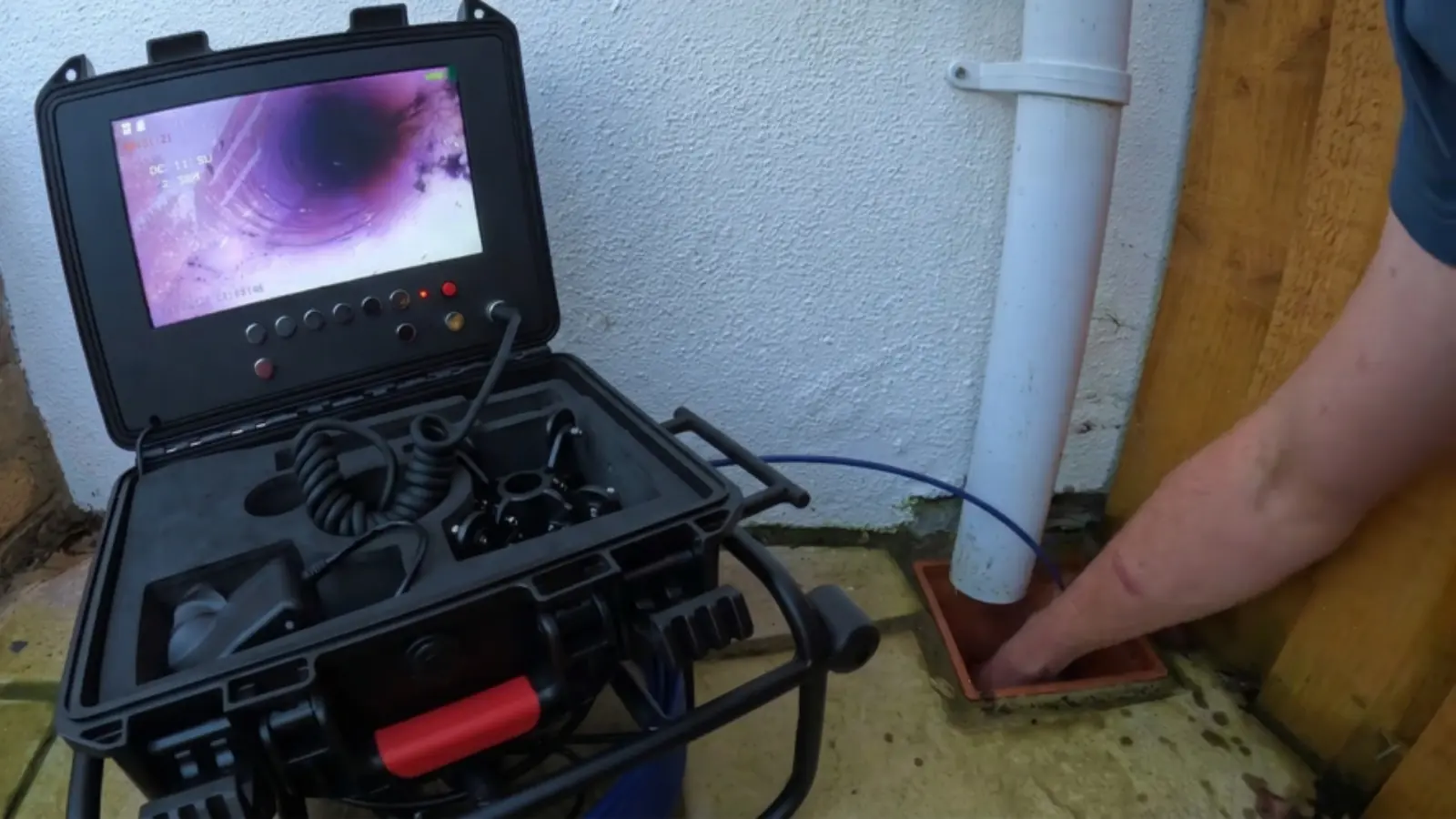
A sewer camera on a push cable runs through the line and shows the inside of the pipe on a monitor. It shows roots, cracks, offset joints, bellies where water pools, and collapses. The plumber marks the location above ground and measures the depth, so any repair is planned, not guessed.
If the camera shows only buildup, sewer line cleaning may be enough. If it shows damage, the options below apply. A planned inspection before buying a house is covered separately on the sewer inspection page.
| Option | What it is | Best fit |
|---|---|---|
| Spot repair | Dig down and replace a short damaged section | One broken joint or a short crack |
| Pipe lining | A resin liner cured inside the old pipe | A structurally sound pipe with cracks or root entry |
| Pipe bursting | A new pipe pulled in while the old one is split apart | Longer runs where the old pipe is failing |
| Full replacement | Open trench and a new line | Collapsed or badly bellied pipe |
Need a diagnosis?
Call and describe the backup. A camera visit can show whether it is a clog or a damaged pipe.
Roots, old pipe, and what to expect in Forest Lake
The city sewer page names tree roots as a common cause of blockages in older service lines. Roots enter at joints and cracks, grow into a mass, and catch paper. A line cleared of roots without repairing the entry point will tend to fill again.
Older clay, cast iron, and Orangeburg pipe fail in different ways. Clay tends to crack at joints, cast iron scales and can rot out, and Orangeburg deforms. The age of your home and the camera view tell the plumber which of these you have.
What decides the price of sewer line repair
Repairs run from small to large, and the camera finding drives the choice.
Insurance typically excludes wear and tree-root damage to the pipe. Sudden backup damage may be covered with a sewer backup endorsement.
Want your real number? Call and describe the problem. You get a clear price before work starts.
Call (651) 946-0134For homes with a sump pump, note that the city code does not allow sump or footing drain water to go into the sanitary sewer. That rule is covered on the sump pump page.
What the city asks of residents
According to the City of Forest Lake, wipes, feminine hygiene products, paper towels, floss, and cat litter do not belong in the sewer. When a backup is reported, the city checks the public main first, and the pipe from the main to your house is the owner's to maintain.
Common Questions
Yes. The line is open 24 hours, every day. A sewage backup is treated as urgent, and the first step is stopping water use and calling.
The city maintains the public main. The owner is responsible for the pipe between the main and the house. If you cannot tell where the problem is, the city asks you to call its Utilities Department first.
Often yes. Lining and pipe bursting both need only small access pits when the pipe condition allows.
A camera shows roots directly. Repeat backups, slow drains, and trees near the line are clues.
Usually not for wear or roots. A sudden backup may be covered if you have a sewer backup endorsement, so check your policy.