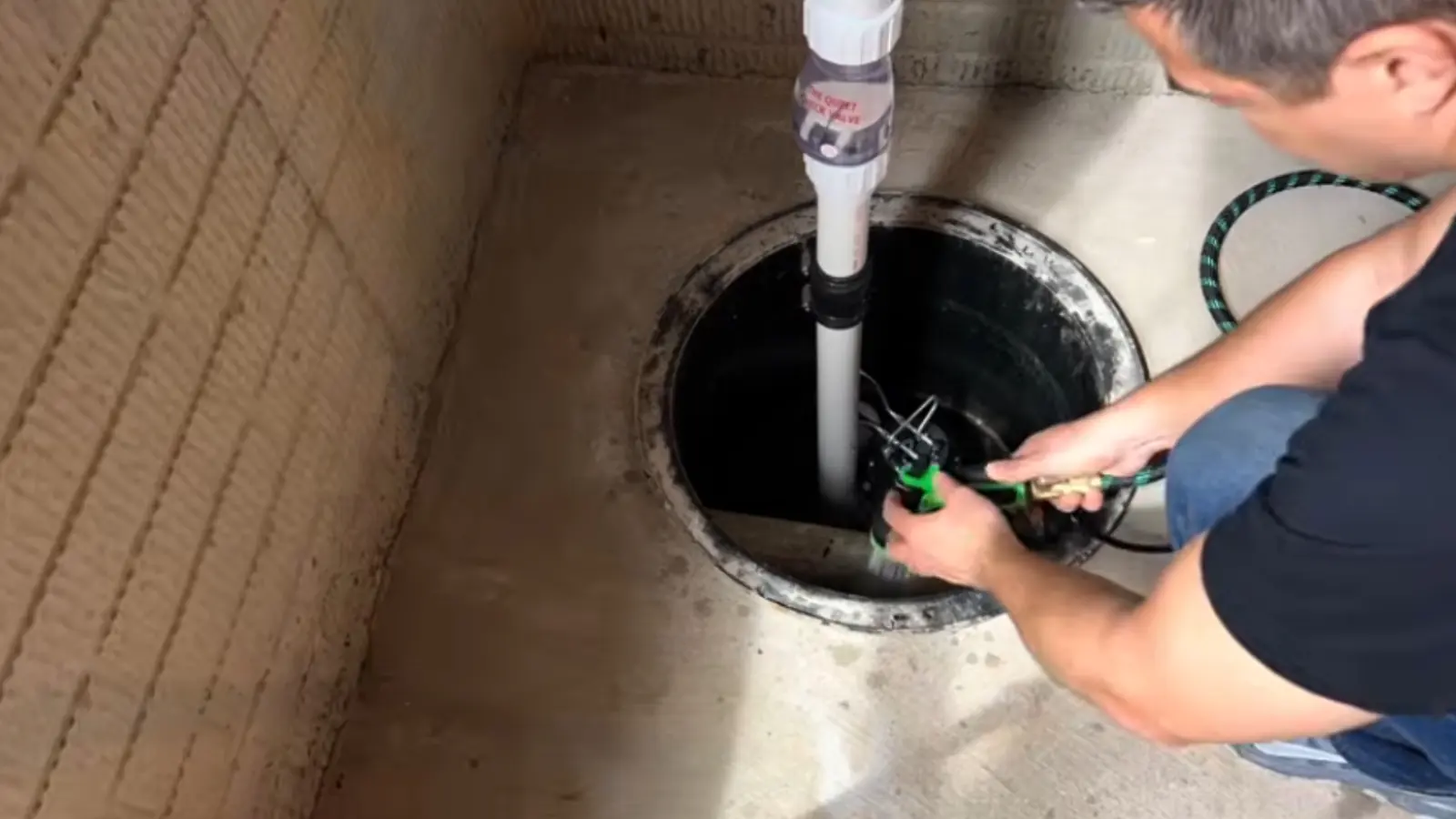
Sump pump failure: what to do right now
- Check that the pump is plugged in and the breaker has not tripped.
- Look at the float. If it is stuck against the pit wall, free it.
- If you have a bucket and the water is shallow, bail into a utility sink or outside, away from the foundation.
- Never touch the pump or cord while standing in water. Turn off the breaker for the area first if you can do so safely.
Most failures come from a stuck float, a clogged intake, a dead motor, or a power outage during a storm. Storms are exactly when a pump matters and when the power is most likely to fail, which is why a battery backup is worth considering.
| Problem | Likely cause | Fix |
|---|---|---|
| Pump will not turn on | Float stuck, no power, or dead motor | Free float, check power, replace pump |
| Runs constantly | Float stuck, failed check valve, or very high water table | Reset float, replace check valve |
| Runs but does not pump | Clogged intake or a failed impeller | Clean intake or replace pump |
| Loud noises | Worn bearings or debris | Clear debris, replace pump |
| Pump works but pit overflows | Undersized pump or pit | Upsize the pump or add a second |
Pump not working?
Call now. A basement can flood faster than you expect.
Where the water is allowed to go in Forest Lake
The City of Forest Lake's code of ordinances, in Chapter 52, prohibits roof, sump pump, and footing tile water from entering the sanitary sewer. Sump and footing lines must be permanent, year-round, and run outside the building or to a city storm sewer. The city may inspect, and properties found noncompliant can be charged a monthly fee. The online code notes it may not reflect the most recent changes, so confirm with the city.
The code also allows an exception. From November 15 to March 15, the City Administrator may permit sump discharge to the sanitary sewer. That can apply if freezing creates a dangerous condition, the pipes are at risk of freezing, or the water cannot reach a storm drain. The permit requires an inspection in March. Ask the city before connecting anything.
Installing or replacing a pump
Check the pit
The pit should be deep enough, lined, and have a lid. A pit with debris or a cracked liner gets repaired.
Choose the pump
A submersible pump is the common choice. Size depends on how much water comes in and how high it must be lifted.
Set the pump and check valve
A check valve keeps water from flowing back. The float is set so it moves freely.
Route the discharge
The line leads outside, away from the foundation, and not to the sanitary sewer.
Dual-pump systems and battery backups add protection. A water-powered or battery pump keeps working when the power is out. Sump discharge pipe repairs and drainage are also part of the work, and chronic water entry can point at the need for basement waterproofing.
Ejector pumps versus sump pumps
A sump pump moves groundwater to the outside. An ejector pump moves wastewater from a basement bathroom up to the sewer line. They look similar but have different covers, vents, and rules. Mixing them up is a common source of code violations, so the plumber confirms which one you have before work starts. Basement bathroom plumbing is covered under plumbing installation.
What decides the price of sump pump work
A pump swap is straightforward, and a new pit is bigger.
Standard homeowners insurance often excludes groundwater and sump failure, though sudden pump failure coverage can be added. Ask your agent.
Want your real number? Call and describe the problem. You get a clear price before work starts.
Call (651) 946-0134Common Questions
Yes. The line is open 24 hours, every day. Stay out of standing water near electrical and call.
Forest Lake's code prohibits sump and footing water from entering the sanitary sewer, with a limited seasonal exception that requires city permission. Ask the city.
Many last roughly ten years, but use, water volume, and quality matter. An old pump is worth replacing before storm season.
It is worth considering if your basement floods when the power fails. The plumber can explain options.
A stuck float, a failed check valve, or a very high water table are common causes.