Start with the camera, not the shovel
A sewer camera inspection shows exactly where the damage sits, what kind it is, and how long the affected section runs. Without it, a repair is guesswork. The footage also tells the plumber whether the pipe is still sound enough for lining or whether it has collapsed.
If you have only had one backup, cleaning may be enough. If it keeps coming back, the damage needs repair, and the method comes down to pipe condition, length, depth, and what sits on top of the line.
| Method | How it works | Best for | Limit |
|---|---|---|---|
| Spot repair | Dig down and replace a short section | One broken joint or short crack | Not practical for long runs |
| Pipe lining | A resin sleeve is cured inside the pipe | Cracks and root entry in a pipe that is still round | Cannot fix a collapse or major belly |
| Pipe bursting | A new pipe pulls in as the old one splits | Long runs of failing pipe | Needs access pits and room to work |
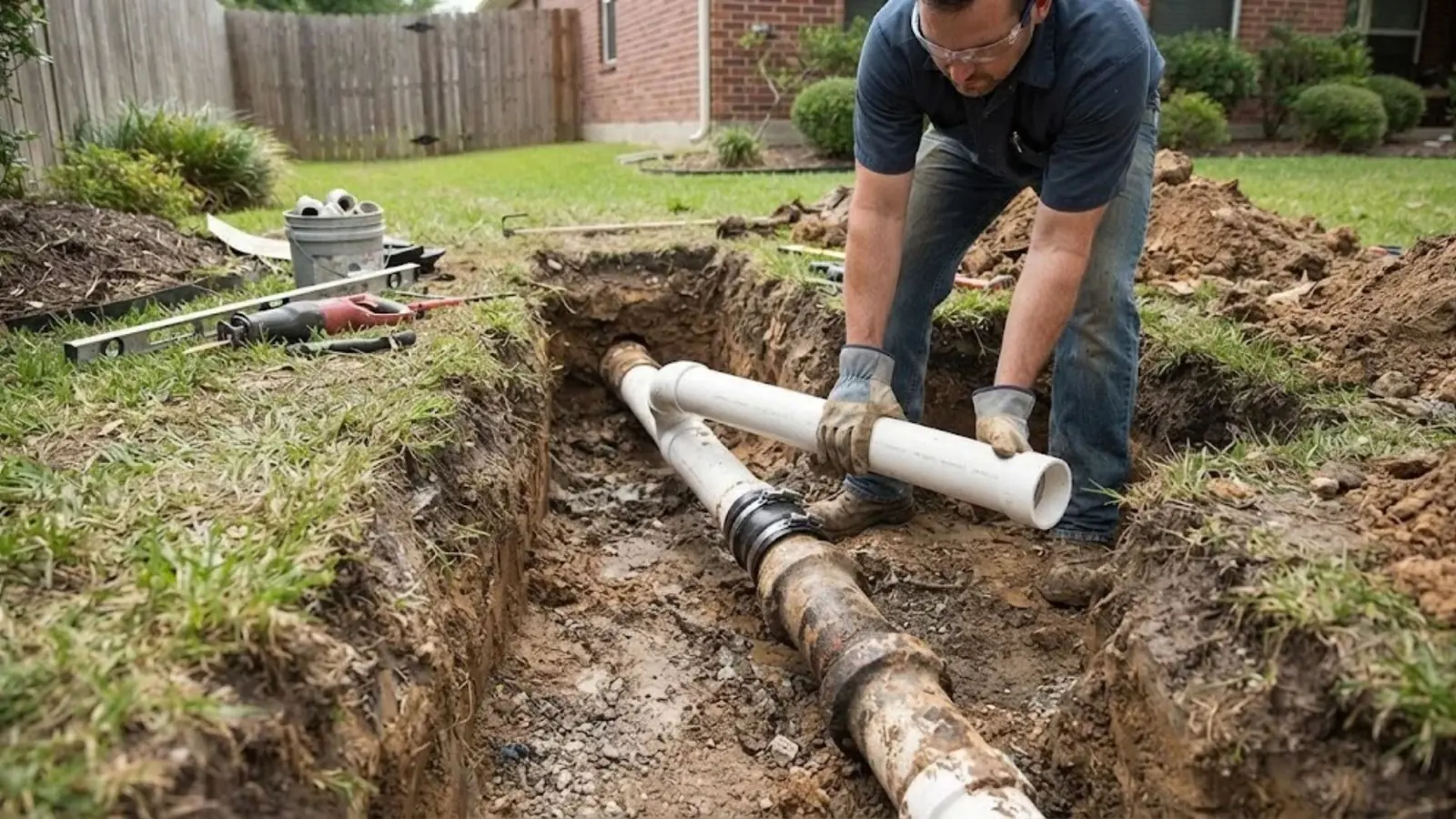
| Open trench replacement | The old pipe is dug out and replaced | Collapsed or badly bellied pipe | Most disruptive to lawn and driveway |
Choosing between lining, bursting, and digging
Trenchless methods suit
- Lines under driveways, trees, or patios
- Pipe that is still round and mostly intact
- Homeowners who want less yard damage
Open trench suits
- Collapsed, offset, or heavily bellied pipe
- Short runs where digging is easy
- Cases where the depth or slope must be corrected
Trenchless repair costs more per foot in some cases, but it saves landscaping and can finish faster. Open trench lets the plumber fix slope problems that lining cannot. The camera and the layout of your lot decide which makes sense, and the sewer line repair page explains the process in more detail.
Unsure which method fits?
Call and describe the backups and the age of the house. A camera visit gives you a clear answer.
What affects the price
- The length and depth of the damaged section.
- The method chosen and how much digging it needs.
- What sits on top, such as a driveway, a tree, or a patio.
- Restoration of lawn, concrete, or landscaping afterward.
- Permits and inspections, which vary by project.
Because the price depends on the footage and the method, no honest number can be given without the camera. Compare quotes by asking each plumber for the footage, the method, and what restoration is included.
Questions to ask before you approve a repair
- Can I see the camera footage of the damage?
- Why is this method the right one for this pipe?
- How long is the section being repaired or replaced?
- What happens to my lawn, driveway, or landscaping afterward?
- Is a permit required, and who pulls it?
- Is there a written warranty on the work, and what does it cover?
A plumber who can answer all of these from the footage is working from facts. One who quotes a trench repair before looking is guessing. If a quote seems high, ask for a second opinion based on the same video.
After the repair
Ask for a final camera run to confirm the pipe is clear and the repair sits flat. Keep the before and after footage with your home records, because it is useful at resale. If the old pipe had roots, mention it to the city when the work is done so staff can watch the connection at the main.
Checking a plumber's license
According to the Minnesota Department of Labor and Industry, plumbing contractors must hold a state license, with a responsible master plumber and a surety bond. The license lookup at dli.mn.gov lets you confirm any plumber before you hire.
Who owns which pipe in Forest Lake
The City of Forest Lake's Sewer Department maintains the public sanitary sewer. It reports 93 miles of gravity sewer, more than 2,273 manholes, and 46 lift stations. When a backup is reported, staff check the main through a manhole. If the main is clear, the blockage is in the pipe between the main and the house, which the page implies belongs to the property owner.
The city says tree roots are a common cause of blockages in older service pipes, and it asks owners to notify the city after cleaning a service line. It also bought No Fault Sewer Backup Coverage for residents at no cost to them, which may reimburse damage from a city-maintained main backup. If you are in Hugo or Wyoming, ask your own city, because the arrangements differ.
Questions Forest Lake Homeowners Ask
A sewer camera inspection shows the damage and the pipe condition. The plumber then recommends spot repair, lining, bursting, or replacement.
The City of Forest Lake's guidance implies the pipe between the main and the house is the owner's responsibility. Call the city's Utilities Department first if you cannot tell where the problem sits.
Usually not. Lining needs a pipe that is still round. A collapse generally calls for digging or bursting.
Usually not for wear or tree roots. Sudden backup damage may be covered with a sewer backup endorsement.
The City of Forest Lake bought No Fault Sewer Backup Coverage that may reimburse damage from a city-maintained main backup. It does not cover a backup from the owner's line.
A spot repair or a lining job can take a day. A long replacement or a deep trench takes longer, and restoration work follows.
Sources
- City of Forest Lake Sewer Department page (municipal utility page)
- City of Forest Lake No Fault Sewer Coverage page (municipal program page)