Shut it down safely first
Do this before looking for the source
Turn off the cold water supply valve at the top of the tank.
Switch off the breaker for an electric heater, or set the gas control to off for a gas unit.
- If you smell gas, leave the building and call the gas utility or 911.
- Open a hot tap to relieve pressure.
Where is the water coming from?
| Where | Cause | Repairable? |
|---|---|---|
| Top of tank at pipe connections | Loose or corroded fittings | Yes |
| Relief valve or discharge pipe | High pressure or a bad valve | Yes, after finding the cause |
| Drain valve at the bottom | Worn valve or loose cap | Yes |
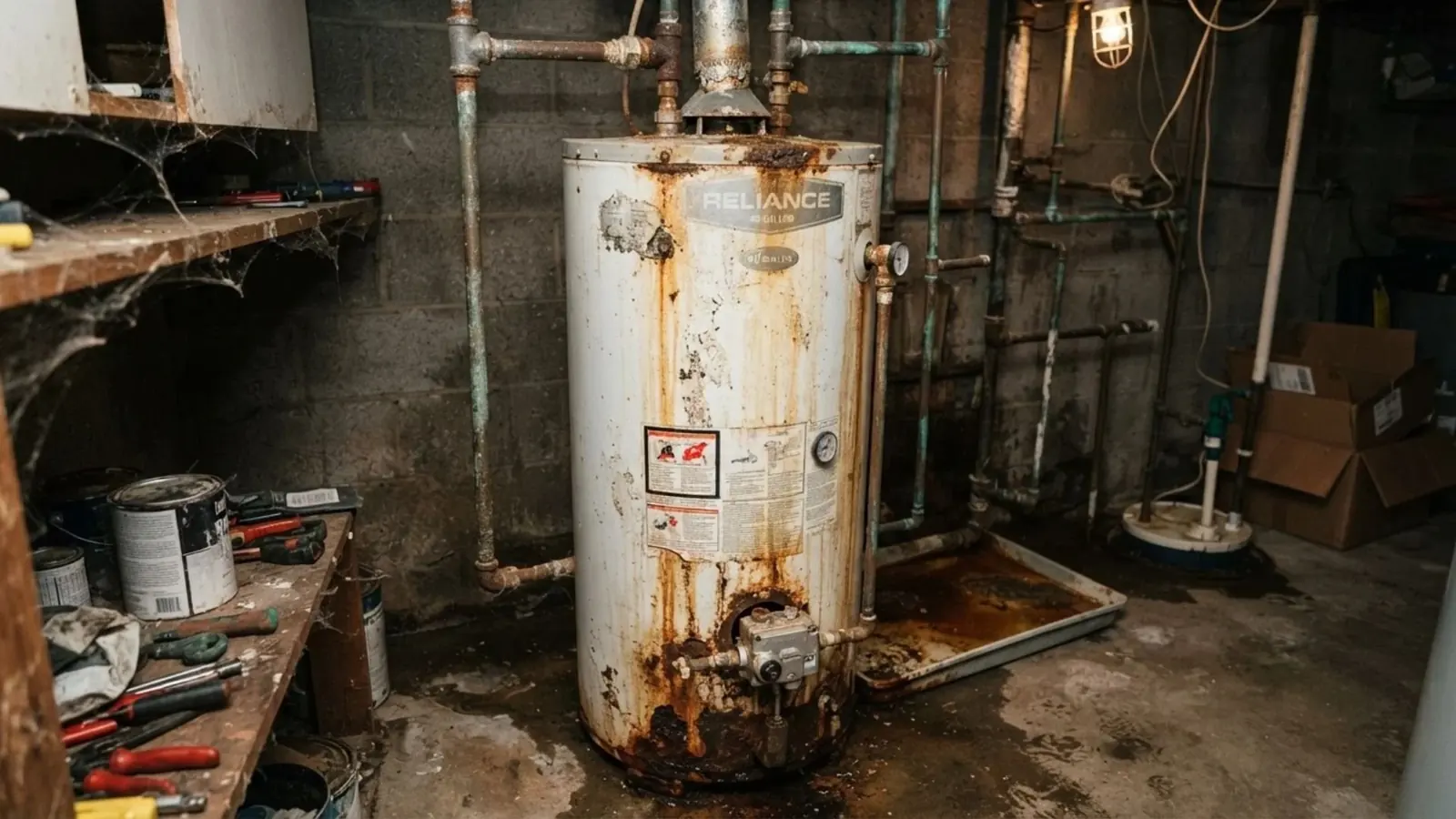
| Base of the tank | Failed tank liner or heavy sediment corrosion | No, replace the tank |
| Around the sides, wet insulation | Tank shell failure | No, replace the tank |
Dry the area and watch for a few minutes. Wipe the fittings with a paper towel to find the wettest spot. A drip that appears from the relief valve may be a symptom of high pressure or a missing expansion tank, not a bad valve.
Repair or replace?
Repair when
- The leak is at a fitting or valve
- The tank is under about ten years old
- No rust shows on the tank
Replace when
- Water is seeping from the tank body
- The unit is old and rusting
- You have had several repairs already
If the tank is done, water heater replacement covers options and sizing. If the leak is minor, repair may be enough.
Not sure where it is leaking?
Call and describe where the water shows. A plumber can tell you whether it is repairable.
Prevent the next leak
- Flush a few gallons from the drain valve once a year to clear sediment.
- Check the anode rod every few years on older tanks.
- Install a drain pan with a drain line if the heater is over finished space.
- Replace the tank before it reaches the end of its life.
What a plumber checks on a leaking tank
- Whether the water is clear, rusty, or has sediment, which hints at corrosion.
- The anode rod condition, which protects the tank liner.
- The temperature and pressure relief valve and its discharge pipe.
- The incoming water pressure, because high pressure stresses fittings.
- The presence of an expansion tank on a closed system.
High incoming pressure is a quiet cause of leaks. A pressure gauge on a hose bib shows the number, and anything well above normal household pressure should be corrected with a regulator. Fixing the pressure protects the new heater as well.
Cleanup and insurance
Dry the area fast with towels and a fan, and photograph any damage. Wet insulation and drywall hold moisture, and mold can begin within a couple of days. Insurance may cover sudden water damage but not the heater itself, so call your agent before throwing anything away.
Safety steps before the plumber arrives
- If you smell gas, leave the building and call the gas utility or 911.
- Turn off the power or gas and close the cold inlet valve.
- Do not touch wet wiring or stand in water near the panel.
- Keep away from the relief valve discharge, because the water can scald.
Forest Lake water and hot water tanks
City water in Forest Lake is softened at the treatment plants and averages 5.5 to 6.5 grains per gallon, according to the city Water Department. That is gentler than untreated hard water, but sediment still collects in the bottom of a tank over time and the anode rod still wears.
The city flushes its hydrants twice a year, starting in April and running about two months, with dead-end hydrants flushed in the fall. The city says flushing can cause temporary discoloration, which is harmless, and running cold water from all faucets for a few minutes clears it. If hot water stays brown after cold runs clear, look at the tank. Homeowners in Columbus and Scandia on private wells should test their water, since well chemistry differs.
Questions Forest Lake Homeowners Ask
The city says flushing can cause temporary discoloration, which is harmless, and running cold water for a few minutes clears it. If only the hot water stays brown afterward, look at the tank.
It can be. Water near electrical parts is a risk, and a gas unit can have combustion problems. Shut off the water and power or gas and call.
Many tanks last roughly ten years, though water quality and care change that.
Not reliably. A leak through the shell means the liner has failed.
It carries hot water safely away if the valve opens. A dripping pipe means the valve is discharging, which points to pressure or a bad valve.
A small amount of condensation on a new tank or a brief drip from the relief valve during heating can be normal. A steady drip or a pool of water is not.
Sources
- City of Forest Lake Water Department page (municipal utility page)