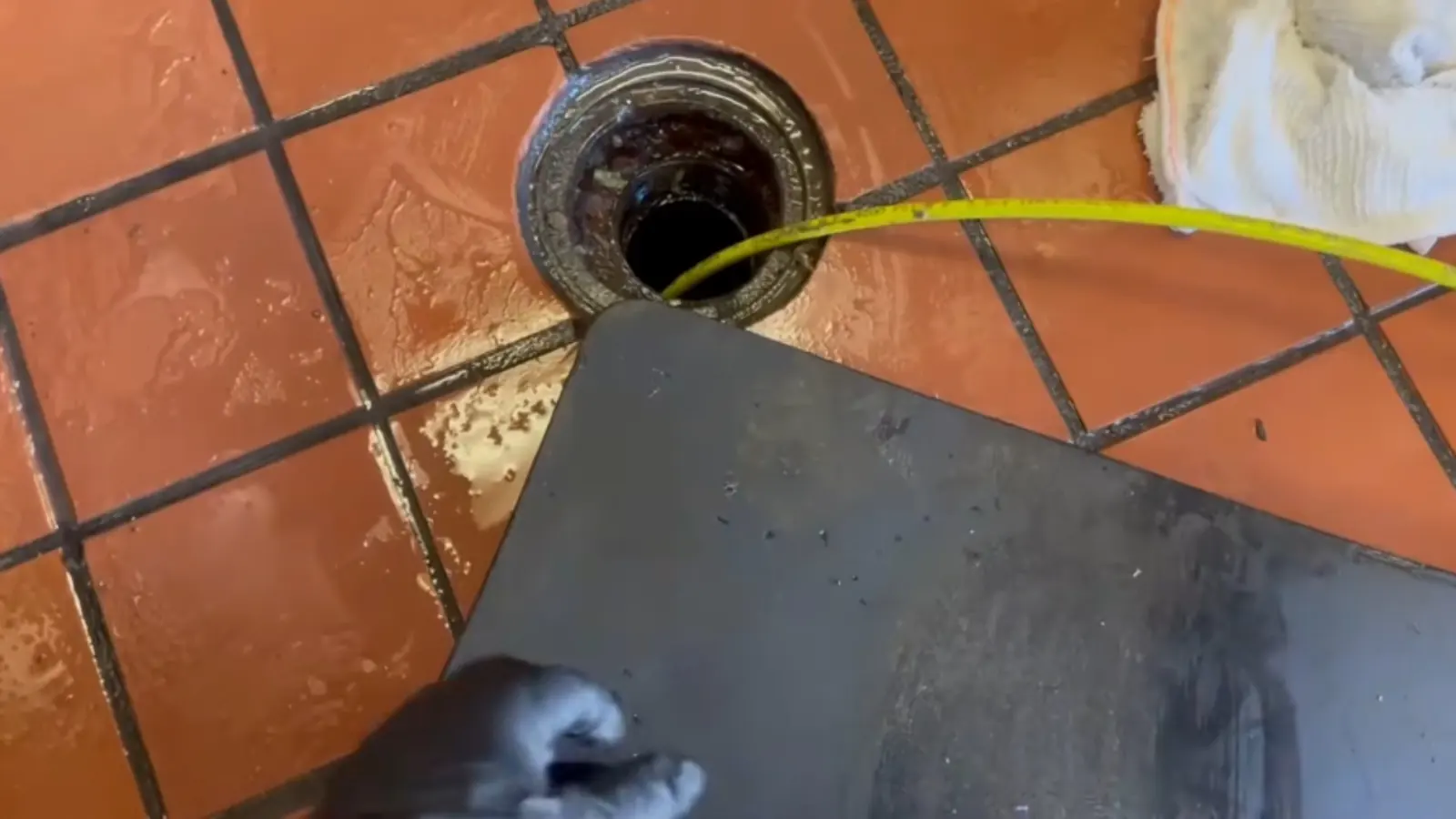
Hydro jetting versus a snake
A cable machine drives a cutter through a clog and opens a path. It works well for a single blockage like a wad of paper or a root mass. What it leaves behind is the film of grease and scale along the pipe wall that sets up the next clog.
A jetter fires pressurized water from nozzles that point forward and backward, which pulls the hose along while scouring the pipe. The result is a pipe wall cleaned all the way around, not just a hole through the middle.
| Question | Cable machine | Hydro jetting |
|---|---|---|
| Best for | Single clogs, paper, and roots | Grease, scale, sludge, and repeat clogs |
| Pipe wall cleaned | No, a channel is opened | Yes, the whole circumference |
| Pipe condition | Tolerates older pipe | Needs a sound pipe, so a camera check comes first |
| Cost | Lower for a simple clog | Higher, but fewer repeat visits |
Why a camera check comes first
Water at high pressure can find weak spots. A cracked, offset, or collapsed pipe is not a candidate for jetting, because the blast can worsen the damage or flush debris into the break. A sewer camera inspection shows the pipe condition before anything is fired through it.
If the camera shows a belly, a root intrusion at a joint, or a break, the plan changes. Roots at a joint can be cut and jetted, but a break needs sewer line repair. The plumber explains what the picture shows before recommending a step.
Want to know if jetting fits?
Call and describe the backup history. The plumber can explain whether a camera and jetting is the better plan.
Where jetting does the most good
Kitchen drain lines
Cooking grease cools and coats the pipe, and a line to the main can narrow year after year.
Main lines with repeat backups
A line that backs up every few months usually has buildup, not just one clog.
Restaurant and commercial lines
Grease and food waste build up quickly. Jetting is a standard maintenance step.
Slow drains throughout the house
Several slow fixtures with no single clog often means the main is narrowed by scale.
What the City of Forest Lake does with its own sewer lines
The city's Sewer Department says it cleans its public sewer lines with high-pressure water jetting and vacuums debris at the manhole. It reports general jetting about once every five years, with trouble spots done annually or semi-annually, and it follows cleaning with a CCTV inspection to find defects.
That is the same logic a homeowner can borrow. A lateral that backs up repeatedly is a candidate for a jet pass followed by a camera look. The city also asks owners to notify it after cleaning a service line, because the process can push solids into the main.
What decides the price of hydro jetting
A short residential line and a long commercial run are not the same job.
Insurance generally does not pay for maintenance cleaning. If a sudden backup damages the home, a sewer backup endorsement may respond.
Want your real number? Call and describe the problem. You get a clear price before work starts.
Call (651) 946-0134For a line that only needs a clog cleared, drain cleaning with a cable is usually enough, and long runs out to the street are handled under sewer line cleaning.
Common Questions
Yes. The line is open 24 hours, every day. A main line backup is treated as urgent, and the plumber decides whether a cable or jetting is the right tool.
On sound pipe it is safe. On cracked, offset, or collapsed pipe it can make things worse, which is why a camera check comes first.
It depends on use. Residential lines often need it only after repeat backups. Commercial kitchen lines are commonly done on a regular schedule.
It clears small roots and can cut roots at joints with the right nozzle. A line full of heavy roots usually needs cutting first and a repair to stop regrowth.
For repeat clogs and buildup, usually yes. For a single simple clog, a snake is faster and costs less.